
An edge through simulation: the digital twin as a game changer in mechanical engineering
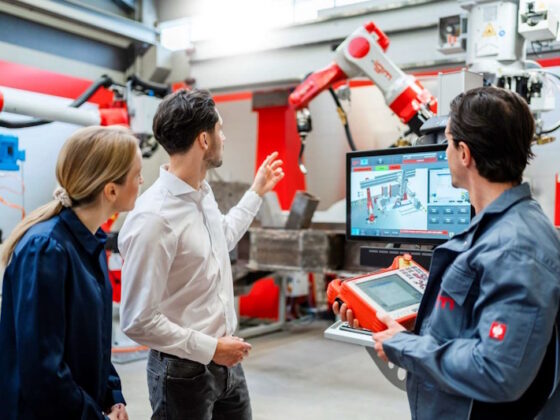
Time pressure during commissioning, costly errors on the real machine, and the growing need for flexibility — these are the challenges that leaders and engineers in modern mechanical engineering face every day. One solution that has evolved from a mere buzzword into a practically relevant technology is the digital twin. igm Robotersysteme AG, a leading manufacturer of welding robots for heavy components, demonstrates impressively how digifai’s twin simulation software not only perfects virtual commissioning but also optimizes a system’s entire lifecycle.
The challenge: mastering complexity
igm robotic systems are highly complex. With 6 to 8 axes, often mounted overhead for maximum use of the working envelope, they weld components ranging from 500 kg to 50 tonnes — from train components and excavator arms to ship parts.
The control system for our robots is fully digital. That allows a fast response, absolute repeatability and, as a result, consistently high quality.

Yet it is precisely this complexity that carries risks during commissioning and later operation. Time-consuming troubleshooting and elaborate trial runs were the order of the day.
The solution: from simulation to an intelligent 3D-HMI with twin
For around a year, igm has been using digifai’s twin software to create a precise digital twin of its systems. According to Auer, the benefits are fundamental and manifest in three core areas:
1. Error-free development and virtual commissioning
In the past, control software was developed in parallel with the machine build and could only be tested rudimentarily beforehand. The interplay of all components as a whole was trialled under time pressure, directly at the customer’s site — an approach that can provoke costly service call-outs and production downtime.
With twin, this process has changed radically. Engineers now develop and test the PLC programs on the virtual model, long before the first piece of metal is machined.
- Collision detection: potential collisions between machine components are identified early in simulation, and the system concept is improved proactively.
- Parallel processes: software development and testing run in parallel with the actual machine build. Virtual commissioning decouples engineers from the physical hardware and creates valuable time buffers.
- Accelerated tests: processes that take hours in reality can be simulated virtually in minutes. This enables comprehensive test scenarios that would be unthinkable on the real machine.
2. A revolution in machine operation: the 3D-HMI
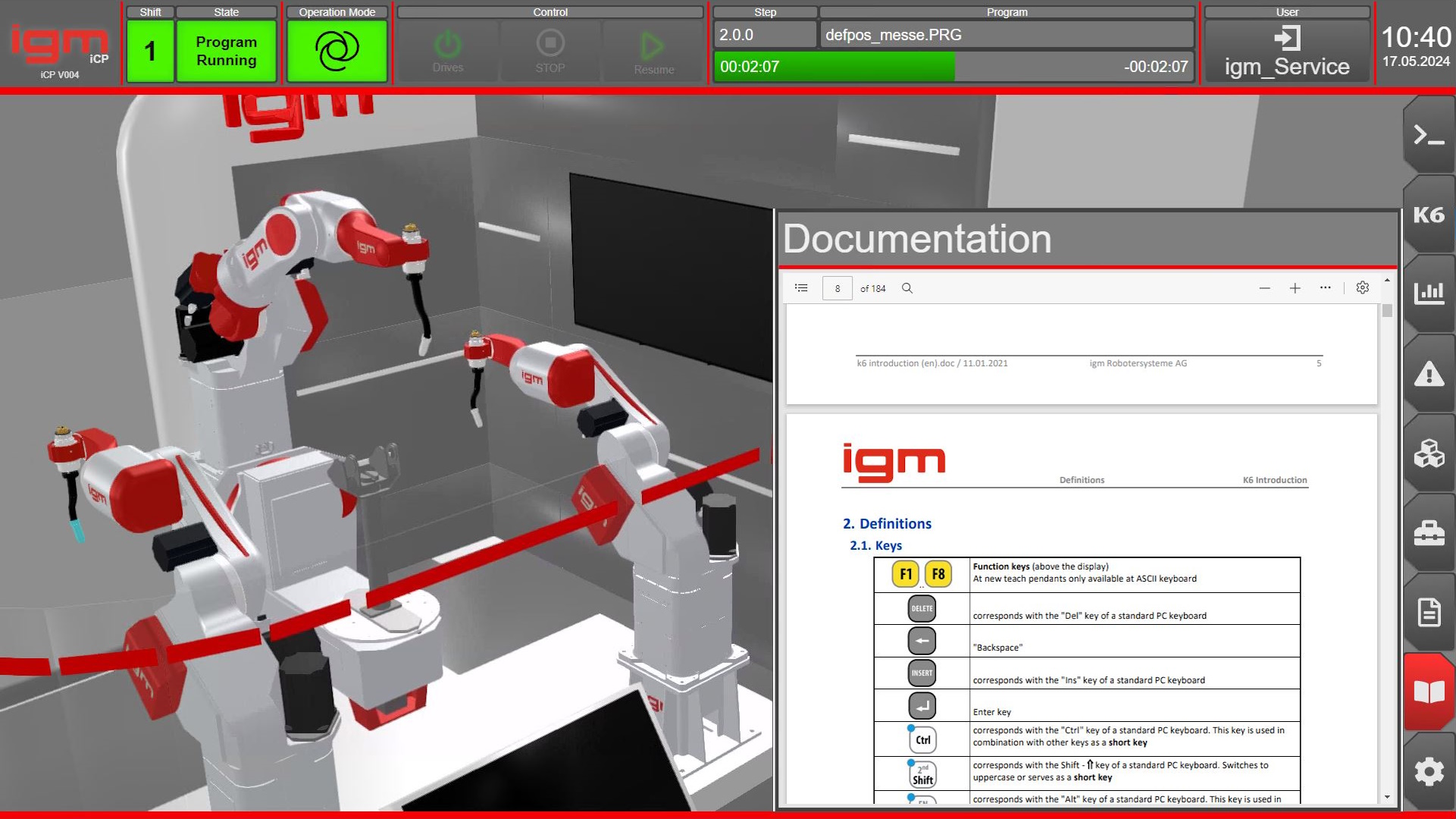
After successful commissioning, the digital twin is not archived — it becomes the heart of day-to-day machine operation. As an interactive 3D-HMI on the touchscreen, it delivers invaluable added value.
In the past, a fault could mean leafing through 1,000 pages of documentation. Today, you simply tap the relevant component on the 3D model, and all the relevant documents and diagnostic data are displayed instantly.
In addition, the movements of the robots, which run shielded inside the welding cell, can be followed live on screen. This increases not only safety but also process understanding.
3. Efficiency across the entire lifecycle
The benefits of twin don’t end after commissioning.
- Retrofits and conversions: For an upcoming retrofit or adaptation to new products, all changes are first tested risk-free on the digital twin. This ensures the converted system is productive again immediately — a decisive factor in the context of Industry 4.0.
- Training: Future operators can be trained on the animated model long before the real system exists. Operating concepts can be validated and optimized at an early stage.
- Sales and marketing: An animated 3D model is more convincing in sales than any 2D drawing. It creates a shared understanding and prevents misunderstandings in the engineering process.
The result: 40% time savings and maximum process reliability
The introduction of twin has led to measurable results at igm. Otto Auer sums it up:
This approach to commissioning saved us around 40% of the time, which amounts to roughly 160 working hours — a huge item. You can bring work forward and validate the software while the system is still being built.
Close collaboration with the software manufacturer was a key factor here. “digifai responded superbly to our specific challenges. For us, for example, it was essential that the welding arc is visualised in the 3D-HMI. That flexibility convinced us.”
Conclusion: an investment that pays off
Choosing twin is more than just acquiring a piece of software. It is a strategic investment in efficiency, safety, and future readiness. By shifting the time- and cost-intensive phases of commissioning into engineering, companies like igm Robotersysteme gain a decisive competitive advantage. The digital twin proves itself a powerful tool that is sustainably transforming mechanical engineering — from the first idea to the end of the lifecycle.