

Virtual commissioning — test machines before they're built
With twin, you simulate your entire system in advance on a digital twin. Virtual commissioning is built on 3D simulation that realistically reproduces the behaviour of the machine and the system as a whole. Test control programs, optimise the mechanics and detect collisions in real time — with no risk and no downtime.
Trusted by leading machine and plant builders



An introduction to virtual commissioning
Virtual commissioning (VC) has established itself as a decisive factor in the modern development process for machines and plants. It lets companies test their planning data and models in a virtual environment before the real plant or machine is built.
At the heart of virtual commissioning is the digital model of the plant, which serves as the basis for replicating and simulating every process. Control programs are loaded and tested virtually, so errors and risks can be identified and fixed at an early stage of development. That not only reduces rework and cost, it also boosts efficiency and productivity in manufacturing and plant construction.
For companies in machine building and production, virtual commissioning offers a clear competitive edge: commissioning time drops significantly, product quality rises, and the risks in later operation are minimised. Validating systems and workflows on the digital twin lets you optimise processes with precision and tailor them to customer requirements.
Virtual commissioning applies from the development of individual machines all the way to planning entire production lines. It helps engineers develop innovative solutions, increase efficiency and cut costs across the whole development process.
Classic commissioning: expensive, risky and time-consuming
Without virtual commissioning, errors surface only on the real plant — exactly when changes cost the most. On top of that, commissioning work usually takes place abroad or at unattractive locations, and many young technicians are no longer willing to take that on to the same extent.
Errors surface only on site
Programming errors in the PLC or robot controller are only discovered during real commissioning — when every hour of downtime costs thousands of euros. Without early-stage testing, the intended results are often reached late, if at all.
Time pressure during commissioning
Commissioning sits at the very end of the project — delays in mechanics or electrics eat into the already tight window for software testing. Delays as early as the quotation stage and initial development phases can add further time pressure downstream.
Collisions and damage
Mechanical collisions only become visible in live operation — risking damage to material and machinery. Without simulating different scenarios in a safe environment, virtual commissioning would otherwise be the only way potential error sources and risks get caught before it's too late.
Test your real control program on the digital twin
Connect your real PLC or robot controller to twin and test the actual control program — before the machine even physically exists. Connecting the control systems is a critical step for successful virtual commissioning, since it's the only way to guarantee seamless interaction between all components. VC lets programming run in parallel with ongoing machine construction. Virtual commissioning with twin makes the entire software test independent of construction progress.
- Hardware-in-the-loopDirect coupling with Siemens, Beckhoff, Rockwell/Allen-Bradley, KUKA, ABB, Fanuc and other controllers
- Software-in-the-loopConnect PLC programs directly to the simulation — no physical hardware required
- Parallel workflowsSoftware development and machine building at the same time — virtual commissioning decouples the two
Test and optimise mechanics — without a prototype
Check ranges of motion, travel paths and cycle times of your plant virtually. Virtual prototypes let you make adjustments and optimisations before construction even starts, reducing errors and boosting efficiency. Virtual commissioning with twin surfaces mechanical problems before they cause costly damage in reality. VC builds a 3D model of the machine that realistically captures geometry, kinematics, sensors and actuators.
- Robot reach analysisCheck and optimise reachability of every position
- Cycle-time optimisationSimulate workflows and spot bottlenecks before they get expensive
- Layout validationCheck the plant layout on the digital twin — ensure space requirements and accessibility
Real-time collision detection — avoid damage
twin detects collisions between all moving parts of your plant in real time. That prevents damage to machines and tools during virtual commissioning itself. Virtual commissioning is an efficient answer to the challenges of modern production — optimisation, error reduction and the tight window between quotation and delivery date.
- Real-time collision checkingAutomatic detection of collisions between robot, workpiece and peripherals
- Visual highlightingCollision zones are instantly flagged in colour — fast identification and correction
- Physics engineRealistic physics simulation for gravity, friction and material properties
4 steps to successful virtual commissioning
How to integrate twin seamlessly into your engineering process and drastically cut your commissioning time.
Import CAD data
Import your existing 3D CAD models directly into twin. All common formats are supported.
Define kinematics
Add axes, joints and motion sequences. Use the library of standard components to speed things up.
Connect the controller
Couple your PLC or robot controller — hardware-in-the-loop or software-in-the-loop. Virtual commissioning begins.
Test & optimise
Run complete test cycles, optimise workflows and move to real commissioning with validated software. Extensive testing on the virtual model lets you compare different control concepts risk-free and easily run variant studies.
Virtual commissioning in practice
See how companies use twin to put virtual commissioning into practice. Virtual commissioning creates a safe environment for testing and optimisation, making risk-free adjustments possible.
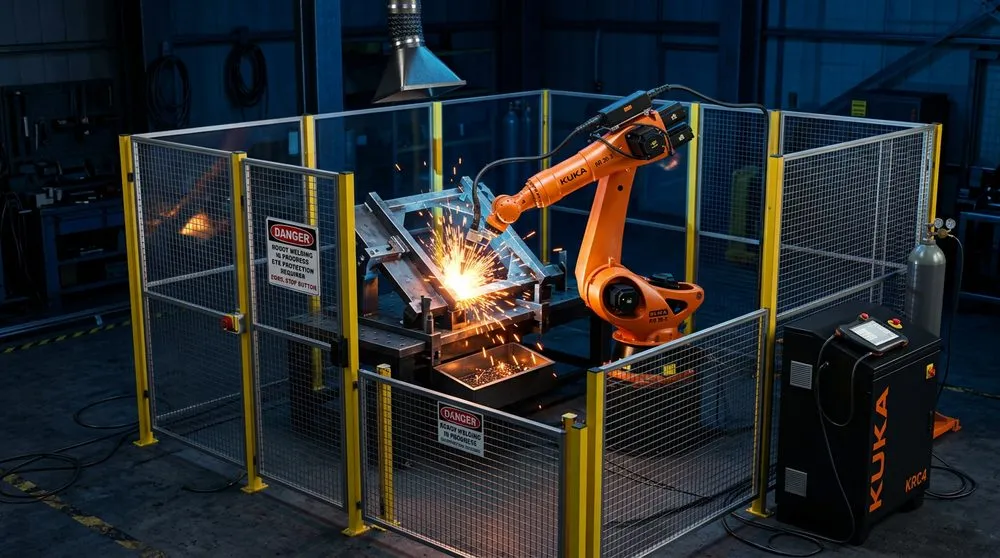
Robot cells
Program robot paths and commission the entire cell virtually — without a single crash on the real system.
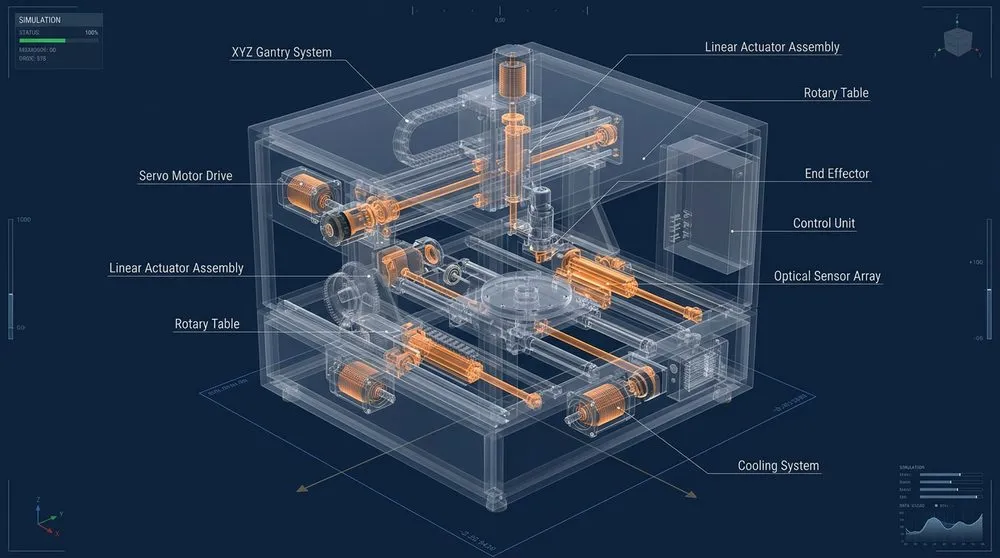
Special-purpose machines
Validate complex special-purpose machines with multiple axes and controllers virtually — minimising risk and rework.
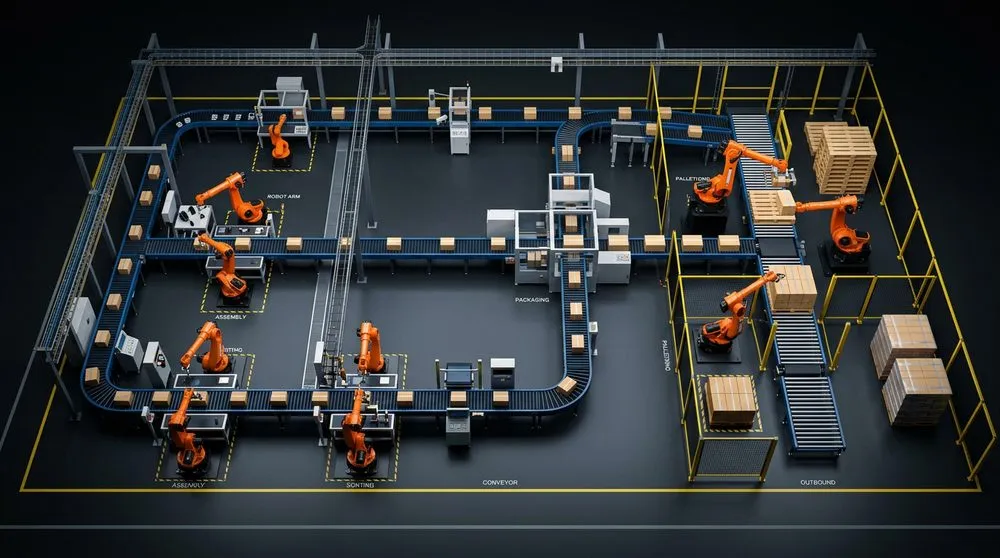
Production lines
Test entire production lines — conveyor technology, robots and PLCs working together — before delivery to the customer. Virtual commissioning optimises production planning by simulating the complex interactions between machines and processes.
What our customers say







FAQ on virtual commissioning with twin
Virtual commissioning (VC) is a method in which a machine or plant is simulated as a digital twin to test its control program (PLC, robot) before the real plant is built. With twin you create a complete digital twin of your plant and connect it to the real controller — hardware-in-the-loop or software-in-the-loop. This lets you catch programming errors, collisions and workflow problems early.
twin supports coupling with all common controllers and robots: Siemens (S7, TIA Portal), Beckhoff (TwinCAT), Rockwell/Allen-Bradley, B&R, Codesys, KUKA, ABB, Fanuc, Yaskawa, Universal Robots and many more. Additional controllers can also be connected via the open interface (API).
Our customers report cutting commissioning time by 40 %. Because software and mechanics can be developed and tested in parallel, lengthy debugging sessions on the real plant are eliminated. Virtual commissioning typically pays for itself on the very first project.
No. twin was built specifically for automation engineers and PLC programmers. You import your existing CAD data and twin simplifies it automatically. The extensive component library also lets you build models without any CAD knowledge.
twin runs on any current computer or laptop. For optimal performance on particularly large or complex projects, we recommend a powerful system with a dedicated graphics card. That way you can be sure your simulations run smoothly.
Yes, twin offers a free trial with the full feature set. Download twin for free here and try out virtual commissioning on your own projects.
Start your virtual commissioning with twin
Try twin for free, or let us show you in a personal demo how virtual commissioning can revolutionise your engineering process.
Book your virtual commissioning appointment now
Find out in a personal conversation how twin accelerates virtual commissioning at your company. Our experts will show you what's possible, based on your specific requirements.
- Free and no obligation
- Live demo based on your use case
- Individual advice from experts
- 30 minutes — no small talk

Choose date & time
Central European Time · 30 minutes · online meeting
Your contact details
Appointment reserved!
We will get in touch shortly at and confirm the appointment with a meeting link.